


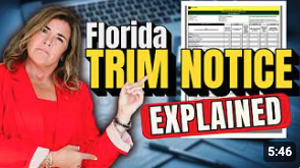
Understanding Your Florida TRIM Notice: What Homeowners Need to Check
If you live in Florida, you probably received your annual TRIM notice in the mail recently. And while it looks official (and a little intimidating), it’s important to remember one thing right away: this is not a bill.
Your TRIM notice is simply an estimate of what your property taxes may look like for the upcoming year. It’s your chance to review your assessed value, confirm your exemptions, and take action if anything looks incorrect.
Here’s a clear breakdown of what to look for and how to understand your notice.
1. Review Your Property Valuation
The first section you should check is your property valuation. Your TRIM notice will show last year’s assessed value alongside this year’s proposed value.
This number is important because it serves as the foundation for calculating your taxes. Compare the two values and make sure nothing seems unusual. Market conditions change year to year, and assessed values can move up or down depending on local trends.
If your valuation seems significantly off compared to the local market, it may be worth taking a closer look.
2. Confirm Your Exemptions
Your exemptions section is another essential area to review. Florida is a homestead state, meaning homeowners with a primary residence are eligible for the homestead exemption.
If you have homestead—or other exemptions such as portability, senior exemptions, or disability-related exemptions—they should all appear here.
Missing exemptions can cause taxes to increase, so verify that everything you’re entitled to is properly listed.
3. Understand What a TRIM Notice Is
TRIM stands for Truth in Millage. This notice is an annual estimate required to be sent to property owners each August. It outlines how your taxes are calculated and which taxing authorities apply to your property.
You’ll typically see three columns:
-
Last year’s taxes
-
This year’s estimated taxes if no changes are adopted
-
This year’s estimated taxes if proposed changes are adopted
These numbers are estimates, not your finalized tax bill, but they provide useful insight into what you can expect.
4. Know What’s Not Included on the TRIM Notice
While your TRIM notice includes ad valorem taxes, it does not include non-ad valorem assessments. These additional charges might include CDD fees, solid waste fees, or other community-related assessments.
Because of this, your actual tax bill will likely be higher than what you see on your TRIM notice, depending on your community and county.
5. Homestead and Non-Homestead Caps
Florida has caps on how much your assessed value can increase each year.
For homesteaded properties, the assessed value cannot increase more than 3% annually. Even in a declining market, a home that previously experienced significant appreciation may still show an increase, but it will never exceed that 3% cap.
For non-homesteaded properties—such as second homes or investment properties—the cap is 10% per year.
If your assessed value rises above these limits, it may be incorrect and worth disputing.
6. Pay Attention to Deadlines
If you believe your valuation or exemptions are incorrect, you have a limited window to file a petition. The deadline is listed directly on your TRIM notice.
This year, the deadline to challenge your assessment is September 12. Missing that deadline means waiting until next year, so don’t delay if something looks off.
The notice also includes instructions and contact information for the Property Appraiser’s office if you need clarification or want to begin the petition process.
Have Questions About Your TRIM Notice?
Your TRIM notice can feel overwhelming, but understanding it is an important part of protecting your investment. Whether you need help interpreting your valuation, confirming your exemptions, or determining whether something looks incorrect, I’m always here to be a resource.
You can contact me directly at 239-776-6872 or leave a question in the comments. I’m happy to help you navigate your TRIM notice and anything else related to real estate in Southwest Florida—so you can continue to live joy in this beautiful place we call home.